Reading

You are currently browsing the archive for the Reading category.

Exciting news everyone!

My friend Kelli, of African Kelli, has just had her first book published, and last night, her very first reading.  I can only imagine the butterflies, joy, and magic in Phoenix!  A dream come true.

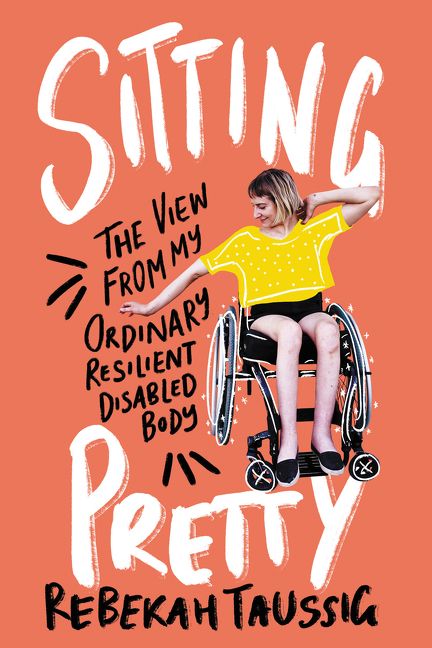
This moment is even more special for me because it gives me hope that my book will one day be out there, too.  As well, my good friend Colleen designed the cover, and rather beautifully, don’t you think?

I am hoping we can all make it a bit sweeter by buying our own copies (mine is on the way).  Let’s get her to the top of the Amazon list!

Under the Same Moon, by Kelli Donley

Abena Udate was selling mangoes on a humid market day in her Mozambican village when she caught the eye of a wandering foreigner. Kidnapped and brought to live in suburban America, the African teenager struggles with the glaring cultural and social differences of her new life. Abena is expected to play along with her kidnapper’s story — she’s just another hungry child plucked from a desolate country and saved by foreign adoption — or else. As her younger brother Kupela searches for clues to explain her disappearance, Abena must decide whether to remain with a family she doesn’t love for a life of luxury, or find a way home to those she loves in a world of despair.

Support an emerging writer – buy it here!

Hello Monday.

It was a terrific weekend here.  One of those lovelies filled with everything and nothing: looking at electric pianos (we’re both going to learn), riding bikes to a pizza place we hadn’t tried before (Dove Vivi – very good), washing clothes, doing chores, lolling about the house reading Virginia Woolf’s To the Lighthouse. Good golly miss molly! Normally I am a one book at a time kind of reader, zipping straight through, but I just can’t do it with her.  The text is so dense.  After about ten pages, I have to switch to something else (it was Astrid and Veronika, but now I’ve finished that and need something else, something breezy and light) out of fear of literary overload.  It is a good book though, the characters and story so rich and full of everything: life, sorrow, joy, art, nature, food...

The hubster’s birthday is Wednesday, another year more handsome and wonderful, I say!  The photo represents his birthday dinner a few days early, a slow sunny Sunday spent in the kitchen.  I felt of another era: barefoot, singing, with a messy apron tied tightly about my middle.  I made lemonade, barbecue sauce, marinated and slow roasted ribs (boneless – no mess!), boiled and dressed potatoes, too.   Talk about the epitome of summer!  We followed all of this with chocolate cupcakes, of course, because it certainly wouldn’t be a Gregory Cooper birthday celebration without something chocolate, no way, no how.  For some reason I didn’t take a picture of them, but I assure you of their goodness.  Anything for my sweetie.  He works so hard and is essential to what makes my life the glorious one that it is.  I love you, Buddy.

I also played with my watercolors a little, making waves and trees that I’ll scan for your viewing pleasure one of these days.  I am definitely growing more confident with a brush.  I’m also thinking about another quilt, one for the guest room.  I’ve got a stack of pink and green fabrics that I think would be rather nice together.

Oh, and Lori – don’t fret about the quilt making!  Just do it, seriously, start wherever you like.  I am a wonky sewer, too.  My seams never seem to be very straight, and I always mess something up.  Oops is a favorite word of mine!  As a matter of fact, after thinking I did a pretty good job of sewing on my binding, I learned that I did it wrong.  Next time I’ll go straight to the You Tube before reading a description over and over again and thinking, “Yah, I know what I’m doing.”  It looks good, at least, certainly not professional, but good.

There you have it, another weekend in Portland Paradise.  Be well, everyone.

This, my friends is a slice of terrific banana cake.  I’ve adapted it from what I think is a pretty terrific book, Classic Home Desserts, by the late Richard Sax.  My number one favorite in this department, and one that I’ve had since 1994, longer than any other, of any kind, I might add.  As someone who is a great purger, this is saying a lot.  This book, no doubt, will be with me until it is coming apart at the seams, all 688 glorious pages.  It is full of great stories and historic recipes, not only a treasure to bake from but one to read, as well.  I’ve made countless recipes from it, all went off without a hitch and tasted even better (two other examples are here and here).  How is that for a product endorsement?  Fortunately, the book is not out of print, but the latest edition, from 2000, is, in my opinion, prohibitively expensive, at least on Amazon ($45 used – $99 new, zoiks!), so, if you’d like to give it a try, head to Powell’s (I’ve seen used copies for $25), your local library, or cross your fingers that they print another edition.

Anyway, to the recipe.  I’ve adapted it from his original, of course, for it is my way, but I honestly don’t think he (or you) will mind.  An additional bit, part of my love for this cake stems from the fact that it is made in a Bundt style pan.  Have I ever spoken of my love for the Bundt pan?  Dessert is somehow elevated when it comes out of a pan shaped like that, truly.

Banana Cake

1 cup all-purpose flour

1 cup whole wheat flour

2 teaspoons baking powder

2 teaspoons baking soda

1/4 teaspoon salt

1 1/2 sticks butter, softened or, if you are short on time, grate it fine with a cheese grater

1 cup sugar

3 eggs

2 teaspoons vanilla

3/4 cup ripe mashed banana (about 2)

1/4 cup, plus 2 tablespoons sour cream or plain yogurt

Preheat the oven to 350.  Generously butter a 10″ tube or Bundt pan.  Sift the flour with the baking powder, baking soda, and salt into a small bowl.  Set aside.

Beat the butter with an electric mixer at medium-high speed until very light.  Gradually add the sugar and continue to beat until fluffy.  Beat in the eggs, one by one; beat in the vanilla.  Put mixer on the lowest speed and add half of the flour mixture, alternating with the banana.  Add the remaining flour, alternating with the sour cream or yogurt, in batches.  Do not overmix.  Pour the batter into the prepared pan.

Bake until a toothpick inserted in the center comes out clean, about 50-55 minutes.  Cool on a wire rack for 10-15 minutes.  Carefully unmold the cake and cool to room temperature.  Eat plain, dust with powdered sugar, or frost.  This is great with a caramel, vanilla, or chocolate frosting.  I’ll bet it would be great with a cream cheese frosting, too.  You can’t go wrong!  Like the picture, it also tastes great with coffee.

Enjoy!

Do you cook much for yourself?  I don’t.  When I am on my own, my efforts are pretty slapdash, grabbing this and that, and often eating while standing up in the kitchen, as I just did (I’m writing this on Wednesday afternoon), happily consuming two slices of Dave’s Killer Bread with a light smearing of unsalted butter, a giant spoonful of white bean dip (made on Sunday to last the week), a slice of Havarti cheese, and a kiwi.  I guess I’ve never seen the point in making an effort when it is just me.  In contrast, I receive great satisfaction in making food to share with the hubster.  I like the time in the kitchen, the gathering of ingredients, the easy rythm of cooking, like the best jazz.  Then there is the pleasure of sitting down together, chatting happily about whatever strikes us, and having just enough so he can take leftovers for lunch the next day.  Sweet perfection.

Then the book pictured above, The Pleasures of Cooking for One, by Judith Jones, came along and got me wondering.  She’d been married a long time, and when her husband died, she didn’t initially cook for herself, thinking it wasn’t worth doing.  Then, with time, and some encouragement from some of her readers, she decided she would do it and found it an exciting and enjoyable challenge to adapt recipes that serve many into individual servings or those that can be morphed further into new meals over the course of days.  More than that, I think it is about deciding that, as individuals, we are important and merit the preparation of a delicious meal.  We matter.  What we eat matters.

Though Judith and I don’t share all of the same tastes (tongue and organ meats not being among mine), we are both economical shoppers and make every attempt not to waste.  The photo is a perfect example.  I was on my own for dinner (the hubster was working out), and I decided I would really make something for myself rather than my usual slapdash meal (though I did double the recipe so he could have some when he arrived – I love to share).  I looked in the fridge and realized it would have to be the souffle because I had neglected to go to the store that day, and we didn’t have much on hand.   I had eggs, rice milk, a little bit of Appenzeller cheese, and butter lettuce.  The souffle left me with two egg yolks, so I decided to gild the lily and make a hollandaise sauce.  The timing was perfect, too.  I made the souffle batter, put it in the oven, made the hollandaise, washed and dressed the lettuce with a simple balsamic vinaigrette, and had about one minute to spare.  As I sat there on my own, with a crazy bun atop my head, wearing sweats stretched at the knees, I felt kind of special, savoring every bite, even oohing and ahhing, like I was being treated to a delicious meal.  Which, I guess, was true.  I treated myself, because, as they say in the commercials, I’m worth it.  Aren’t we all?  I’d definitely do it again.  Thank you, Judith, for the inspiration and the recipes.

Without intending to, I’ve been on a bit of a reading hiatus.  I’ve started a few that I actually intend on finishing, but just couldn’t fully get into them.  Thankfully, dear Julia came to the rescue.  I put my name in the library queue for this last year, probably in September, and it finally made it to the top of the list.  This can be blamed on the fact that, if you look at the sticker on the cover, I read the LARGE PRINT edition, of which there is only one copy.  But, alas, as silver linings abound under this red roof, the book arrived in the right state, at just the right time.  I felt so gloomy last Monday, wondering about my life.   Then, when I started to read this boisterously large print, it was like having Julia’s effervescent personality reading aloud to me, the words bright, lively, and heartfelt. The two of us sat in my favorite chair, while she told me all about  her remembrances of la belle France, delicious food, and the perils of finding direction a bit later in life, for much like me, Julia Child knew what she didn’t want before she knew what she wanted, and then everything just felt right.

The story moves in time, from her first view of France at Le Havre, at the age of thirty-six, to her last day, closing up her beloved getaway La Pitchoune for the last time in 1992.  From her first meal to her last, Julia describes, in glorious detail, what a joy it was for her to discover French food and immerse herself completely in the mind boggling detail of its creation, the painstaking formulation of recipes, and testing, so much testing!  Batch after batch of mayonnaise down the toilet, yet totally worthwhile for the knowledge and pleasure it brought her.  She also writes about the perils of the publishing world, of working so hard for so long only to wonder if anyone, beyond her loved ones, would ever see the merit of her work. (Gulp.)

Though I certainly got a kick out of her love for all things French,  in and out of the kitchen, it was the relationship between Julia and Paul that resonated most with me.  They were such a delightful pair: witty, caring, and fun, too.  They gave marvelous parties, sent charming Valentines (they weren’t organized enough to send cards at Christmas), loved each other beyond measure, supported each other through thick and thin, and were, quite simply, the best companion each could ask for.

A bit of humor and wonder in the end.  The picture shows the lunch I was enjoying as I was reading.  I set the book down, and realized, what I was eating – a kiwi, carrot, sliced spicy pickle, and a breaded Quorn patty, slathered in homemade “Come Back” sauce (mayo, yellow mustard, ketchup, and pickle relish) and topped with pickled peppers.  Though I made the pickle and the relish, the irony of my choice, and Julia’s certain horror, made me laugh out loud.  Truth be told, I can be a very lazy cook, and thought I might be doing the world and the environment a favor by eating Quorn.  It’s vegetarian and doesn’t make me feel awful, like soy.  Now I’m not so sure.  The stuff is made in England.  That’s a tad further than the farms where New Seasons gets their chicken (as our friend Hans would say, “Which is more worser?”).  With that in mind, I felt inspired to make and freeze some chicken with various seasonings for other lazy lunches.  I think she would approve.

It’s a beautifully sunny day in the neighborhood, and, as you can see, the kitties are soaking it up.  I was, too.  I even took off my shoes and socks, rolled up my pants, and pretended it was warmer than the thermometer would indicate, toes tickling the warm pavement.  I think bliss would be the right word to describe it.  Did I mention that I ate a tangerine in the process?  Drippy and delicious.

Aside from that, I don’t have much to tell you.  The final season of  Lost starts tonight.  I admit that I have been sucked into that vortex and am quite looking forward to a resolution.    We saw An Education last night.  I loved it and will be singing its praises in the Friday Spotlight.  I’m bouncing between two very interesting books, too.  Vanessa & Virginia and A Homemade Life. My January illness brought my reading to a standstill, so I am glad to be back in it, and with such good reads, I can’t complain, not one iota.  On top of all that goodness, I’ve got Lily Allen’s “The Fear” playing on a loop in my mind.  Life IS fucking fantastic.

Sorry for the swear word, Grandma.  Pretend you didn’t see it.

For a long stretch of time last year, I wanted to move to the country.  I thought it would be nice to have quiet, to see the stars shine, and a bit more space between me and some of my neighbors, without a view of their varying, ahem, decorating styles (snob).  I also thought raising my own livestock, like chickens and a pig, would be fulfilling.  I’d know where everything came from, what it was fed, and that it had a good life.  I have since changed my mind – loving the easy walk to Hawthorne, Woodstock, and downtown, the lure of the Academy Theater, and best of all, my dear friends who live nearby.

This, however, does not mean that I don’t like to occasionally wax poetic on the virtues of a hobby farm, and so I read about them in wonderful blogs and books like today’s.  In Made from Scratch, Jenna Woginrich writes in simple, yet beautiful prose about her life as a homesteader: baking, raising animals, growing vegetables, keeping bees, even making music on a fiddle.

What I liked best about the book is her honesty.  She’s never done any of this before, but is willing to “Research, Son” and ask questions (and for help) like nobody’s business.  As she writes about her experiences, we learn that, while there are many, many joys to a more earth driven and sustainable life, homesteading isn’t always easy, poetic, or romantic.  There are many hurdles and much to learn, like how to plant a sensible garden, keep bears from a bee hive, or to put down an animal in dire pain (the hardest part of all, I think).

It is a wonderfully rewarding journey, even if it was only vicarious.  She’s also got a blog if you’d like to see what she’s up to at the moment.  It’s pretty interesting: Cold Antler Farm.

Still Here

I’m sitting in bed as I write this.  For one, if you recall, I don’t turn the heat on during the day, so it is rather cozy under the covers.  Two, I had my second chiropractic appointment yesterday, with my very first adjustment.  She made two quick pops of my spine.  My eyes were closed, and at the precise moment of the pops I saw a swirl of color, a vivid purple and yellow.  It was so dreamy and peaceful that it made me wonder why I ever feared this event.  She finished with some work on a very tenaciously stuck muscle – pushing, pulling, twisting.  It wore me out (but not the muscle – for the time being, it remains determined to stay in a tight knot), and now I am quite sore in the right upper flank of my back and contemplating a very light row in the basement after I’m finished with this post.

Which brings me to the book Still Here.  I was a very independent and conscientious kid, so much so that I was treated like an adult long before the time I actually was, giving advice, helping out.  I felt a certain measure of pride (I can do it by myself!), though sometimes a bit of anger, too, sometimes I just wanted to be a kid.  In any case, I got this sense that I with my will and determination, I could fix any problem, and, for the most part I did, and do.

Fortunately, the universe presents us with opportunities to learn, grow, and change, at the precise moment we need it, delivered via the ego crushing realizations that we are not in absolute control.  For me, it came with my surgery and, more recently, the fact that my back hurt nearly all the time, and I couldn’t move my arm upon waking in the morning.  For Ram Dass, his opportunity came when he was writing a book on aging, how to embrace it and the changes it brings, including death.  He was near completion but having a difficult time with the last chapter.  Then came a stroke (where he nearly died himself), and everything he had imagined or experienced from the outside became his own path: illuminated via paralysis, physical pain, the loss of words and the slowing of his speech, and, ultimately, the loss of his independence.   The book took on a whole new meaning because he became an “incarnation of wisdom” rather than a “wise elder.”

I really appreciated the book’s honest approach to this life and these bodies that eventually fade.  As Jim Morrison famously sang, “No one here gets out alive.”  Why deny that?  Why also deny that for most illnesses, we are never truly cured, only healed.  Our bodies and minds rarely go back to precisely what they were before.  His aphasia will likely never fade, nor will he ever play golf or be able to drive again.  I shall never have a uterus, right ovary, or fallopian tubes.   This need not be soul crushing, too.  Aging, illness, and the changing of roles take away the distractions of our ego and bring us closer to all that is precious in life. “That’s the ultimate in healing – “making whole” – because there’s no longer anything left out, including the sickness.”

As well, Ram Dass speaks of this process and how it provides the chance to receive help and love.  “The stroke created more love than I had ever seen before.  Even people who don’t like me sent me their good wishes!”  I could not agree more.  I can’t fix all that ails me.  I need the help of professionals and friends.  Thankfully, I opened myself to receiving it or would have missed out on some pretty wonderful experiences.  Shortly after my surgery, I was returning a bowl to my neighbor’s house.  She had fixed us a delicious meal to help us through.  It was one of those impossibly hot days of summer, over 100 degrees, and I made it to her house just fine, giving the bowl to her daughter, Maren.  Then, despite the fact I had only walked across the street, I nearly fainted from fatigue, and knew I needed help getting back home.  Maren held me tightly, and we walked across the street together.  In that moment, I felt so overwhelmed with love, kindness, and gratitude, as if I were being carried by grace.  This feeling was to return again and again throughout my recovery with the delivery of a meal, flowers, the washing of dishes, or a phone call.

Thanks to my own journey, and the help of this book, I see it ever more clearly.  Change (big and small) can be as natural as breathing, something to be embraced and experienced fully rather than feared.  Ride the roller coaster, but like a child – with wonder, anticipation, and exhilaration, the cherished help of friends (and good doctors), closing in on the divine.

The Help

I once heard an interview with one of the Grand Wizards of the KKK.  I was driving home from grocery shopping, and as I traveled the route, I remember a sense of being suspended, out of time, at what I was hearing.  I expected to hate the man speaking, to want to verbally assault him for the harm he and his cronies had inflicted upon humanity, but I could not.  The strange truth being that the man was not wholly evil, but rather as interesting and complex as you or I.  During the interview, his voice was measured and calm, discussing the everyday to the unusual and incomprehensible (at least to me).  I was especially struck by the way he spoke of his family, exhibiting the tenderness of a proud, protective, and loving parent.

It is with this same complexity and confusion that Kathryn Stockett approaches the nascent Civil Rights Movement in 1960’s Jackson, Mississippi.  Here, the narration changes between the voices of three distinct women: the young, naive, and white Eugenia “Skeeter” Phelan, and two very seasoned maids, Aibileen and her best friend Minny.

When Skeeter, an aspiring writer, is not offered a job at a publishing house in New York for her lack of experience, but the advice, “Write about what disturbs you,” she does just that.  Inspired by the latest trend among her circle of friends, the construction of an outdoor toilet for the help (under the guise of “safety”), she decides she will enlist the aid of her friend’s maid Aibileen (and anyone else they can find) to write about what life is like in the service of those who have no qualms about having their children raised by black people, yet worry about their health and the safety of their valuables in their presence.

Getting the stories of maids is a dangerous and entirely naive proposition because during that age, lives could be destroyed with a word.  Do not hire this woman because {insert complaint, real or imagined} and she’ll never work again, maybe her husband, too.  As well, and especially in Jackson, Mississippi, black women had virtually no rights, no ability to vote, no access to unemployment, Social Security, nothing.  They literally worked until their dying day, so for anyone to risk their livelihood to tell the truth of their experience was pretty astonishing, yet that is how change happens, a few brave acts that blossom into something greater than us all.

This is such a great read, steeped in history, disparity, and learning, yet the story is neither heavy-handed nor patronizing to either side.  Much like the man from the KKK, each character is colored by experience and preconceived notions, but there is so much love, compassion, and, for the most part, a willingness to concede defeat and open their hearts and minds to a more inclusive way of being that I couldn’t help but love them all.

Knock on wood,  my previous stretch of disappointing reads has ceased, as I’ve enjoyed a few decent books in a row, all marvelous stories and worthy of finishing, which is so satisfying.   Many thanks to my tax dollars and the Multnomah County Library for keeping my bookish desires happy.

Here are two of my most recent and engaging reads, on quite opposite ends of the literary spectrum, which suits my tastes just fine (pun intended, you’ll see).  Though this novel won the Pulitzer Prize for fiction nine years before I was even a twinkle in either of my parents’ eyes (1962), it seemed, to me, at least, that it could have been written today, as it speaks to the quite contemporary issues of faith, family, friendship, and healing.

The Edge of Sadness follows Hugh Kennedy, a recovering alcoholic, as he returns to Boston and his damaged priesthood after a four year sojourn in the desert southwest.  The story centers around Father Hugh’s re-acquaintance with the Carmody family: the often charming and devilishly cruel patriarch Charlie, his son, Father John of the dazzlingly ideal parish, St. Raymond’s, his daughter, Helen, and a colorful host of  siblings, children, grandchildren, and friends.

Father Hugh, once a highly regarded priest in a fairly well-to-do parish, is now leading a rather rag tag flock at Old Saint Paul’s, a poor and crumbling parish just outside of his old neighborhood.  His one curate, Father Danowski, often to Father Hugh’s chagrin and sometimes his delight, is an eternal and energetic optimist, always trusting that new life will be breathed into Old Saint Paul’s, returning the parish to it’s glory days.

At 640 pages, the novel is a leisurely drive in the country, as Edwin O’Connor carefully unfolds the stories of the tricky relationships between the Carmody’s, the reasons for Father Hugh’s fall from grace and his assignment at Old Saint Paul’s, as well as the inner life of a priest.  Though it hardly painted an idyllic portrait of family, priesthood, or parish life, I found the story beautiful and magnetic in it’s honesty.  For isn’t it encouraging to imagine that even men of the cloth have the same struggles with prayer, envy, trust, and above all, faith, as the laity?  I had a hard time putting it down.

Okay, since this is a long post, I’ve included an intermission, so you can do exactly what I did in between writing these segments, eat.  Of course I wanted something quick, so I wouldn’t dawdle and not finish this post by my self-imposed deadline.  What I made is quintessentially Colleen and yummy to my tummy, though maybe not yours.  A bit of tuna, some sliced nacho style jalapenos, a drizzle of organic EVOO (as Rachel Ray would say), and a sprinkle of smoked sea salt.  It really hit the spot!

Onward to David Lebovitz and his The Sweet Life in Paris.  He describes it as delicious adventures in the world’s most glorious – and perplexing – city.  Though this is quite true, I would also add the word hilarious after delicious.  Indeed.  Mr. Lebovitz is a highly entertaining story teller.

Without spending any time with the delicious (and sometimes pretty, I’m sure) sounding recipes, the book is a quick and laughter-filled frolic through the charming, and sometimes infuriating, streets of Paris, especially when you step in dog poo, because you will, dear reader, I gua-ran-tee it.  I zipped through it over the course of an afternoon, easily laughing and commiserating with David on his adventures from the quotidian to the unusual.

However, where I throw up my hands in frustration and declare a moratorium on visits to Paris as a result of being chastised for not having exact change, failing to understand the delicacies of French plumbing, or being jockeyed out of my position in line, David joins the party and fully engages, eventually becoming one of those line jockeys himself.  C’est pas ma faute!

If you have any interest in learning about an honest Parisian life and some delicious sounding recipes, grab a copy.  It doesn’t disappoint!

« Older entries