Learning

You are currently browsing the archive for the Learning category.

I am not a religious person, but a very, very spiritual one. And though my Dad has read the bible daily, for as long as I can remember, I have never had the desire or inclination to do the same. I’ve found people’s interpretation of religious texts, and religion, as a whole, to be more dangerous to the general population than not. The Crusades, Islamic terrorism, Hindu & Buddhist extremism, the sexual abuse of priests and pastors on the innocent, the list goes on and on and on.

That being said, there are two very powerful notions of God that are with me daily. That he or she resides within every body and especially that a person can encounter God any place, any time. I always had difficulty believing this when encountering the cruel people of the world. Why would God reside there, when there are far nicer places to be? But then I thought about the awful person being an instrument of teaching for others, for me. God works through that person to show me how NOT to be. What to stand up for and rise against.

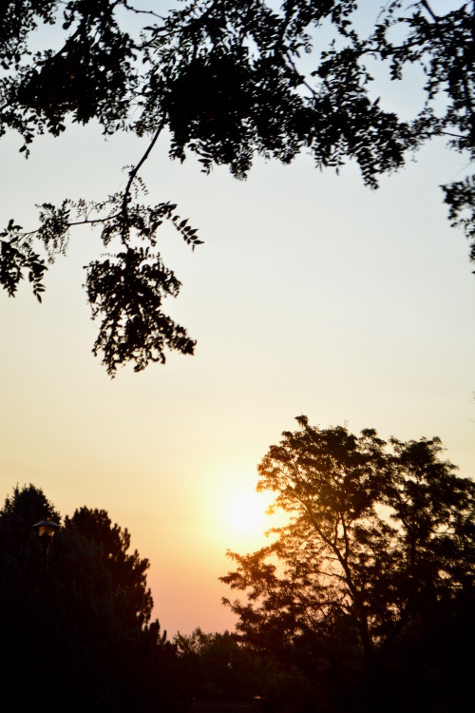
I’ve also been thinking a lot about how when I was little and would see a brilliant sun beam, I believed God was shining a light on a person in need. How the thought left me joyful. The sticky bit was in wondering if the person knew it. How often are we aware of that brilliant light shining on us? How often do we take the time to recognize the beauty and love around us? I think it’s time I do more to seek that awareness. That presence.

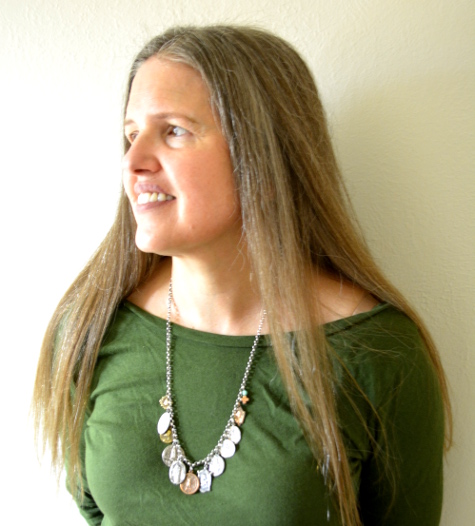
And a perfect tie-in to the photo up yonder. When my Great Aunt Mary died, my Grandma Tess found hundreds of Catholic medals in her room. I took maybe a quarter of them and fashioned a necklace with a few of them a while back. I liked the spirit of it, of having metal worn by her prayerful hands, but the look wasn’t quite right. I took it apart and made this one, with all my favorites. It jingles and sings, speaking loudest of her, while buoying my spirit, too.

The Unknown

For much of my life, I’ve been the answer person. Colleen knows. Sometimes, I don’t know how I know. The answers perhaps living for eternity in my belly, surfacing with Dewey decimal precision at the exact moment needed. Other times, springing from countless books and passages read and remembered.

This knowing, as one might imagine, is the perennial blessing and curse. Knowledge IS power! That same intelligence, however, when called upon by former friends to settle a score (true story), not so great.

Lately, and perhaps brought upon by this dreaded virus, my knowing has been wholly inadequate. The anxiety of it! When? Where? Why? What about this? The space where my personal Dewey might previously reside, an echoing vacuum keeping me up at night, hours and hours tick-tocking by.

What to do? Initially, I searched myself, one inquiry after another, ad nauseum. Then, with a surprising flourish, the solution to my question. Succinct and really quite brilliant in its simplicity:

All in good time. Answers will come, or not. Be patient and forgiving. Forget the query and go, go, go.

creekside

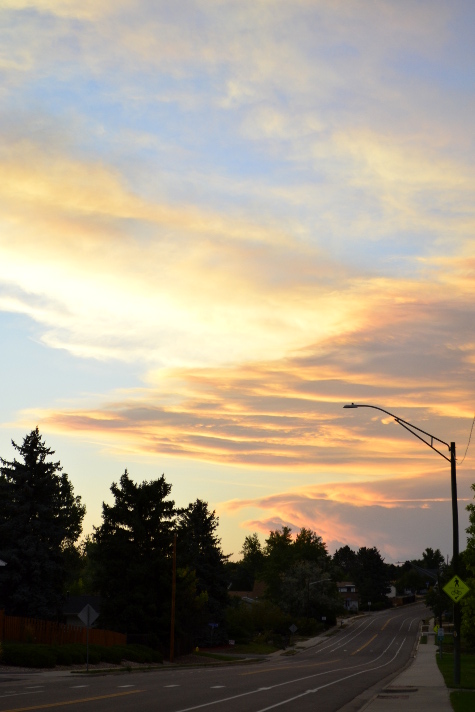
Sun down on the street where I grew up and where my parents live still. Arvada, and no, silly spell checker, I did not mean armada. The clouds are smoke from the Cameron Peak fire, the beautiful detritus of dreams gone up in flames. These will travel south, cloak us and choke us at our own house, some 80 miles distant, in the days following.

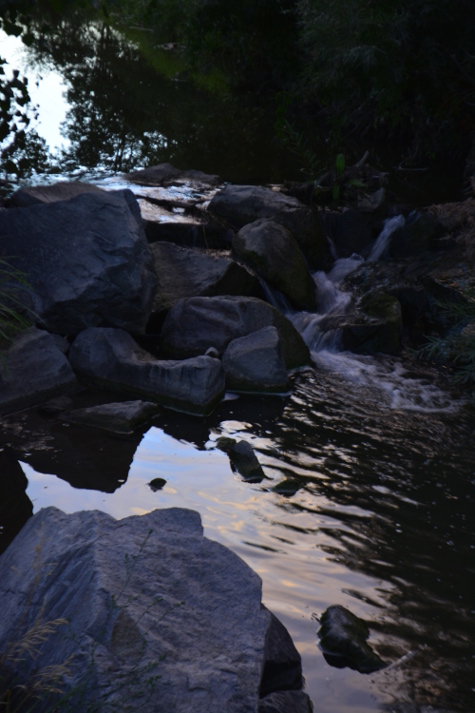
Little Dry Creek, babbly and bubbly and ever on the move. How distant the memories of childhood days spent along its banks. Feet in the water, eyes out for craw-dads.

For two weeks in August, I descended, hard and fast off the cliff of depression. No right reason. No squirrel suit. No parachute. Every nerve and cell slowing to an excruciating crawl. As the days passed, I watched my movements, the swish of hand and step of foot as an alien in a new body might experience. Articulating joints and muscle concentrated and in hyper slow motion. My body but not my body.

Late one night, I made a tearful advance apology to Greg for a suicide I believed was inevitable and for which I had a solid plan. I felt as though every ounce of hope and purpose drained from my being.

Then, while lying in the bath (thank goodness for them!), I remembered another difficult time, from ages ago, and a description of the Dakini Bliss from Pema Chodron (I’ve included an excerpt about it after this entry). And so I asked myself, why can’t THIS be the Dakini Bliss again? Why the hell not? Once I realized I couldn’t reply in the negative, I knew the hardest part was over, hopped out of the bath, and told Greg I was safe.

<< >>

A few years ago, I was overwhelmed by deep anxiety, a fundamental, intense anxiety with no storyline attached. I felt very vulnerable, very afraid and raw. While I sat and breathed with it, relaxed into it, stayed with it, the terror did not abate. It was unrelenting after many days, and I didn’t know what to do.

I went to see my teacher Dzigar Kongtrül, and he said, “Oh, I know that place.” That was reassuring. He told me about times in his life when he had been caught in the same way. He said it had been an important part of his journey and had been a great teacher for him. Then he did something that shifted how I practice. He asked me to describe what I was experiencing. He asked me where I felt it. He asked me if it hurt physically and if it was hot or cold. He asked me to describe the quality of the sensation, as precisely as I could. This detailed exploration continued for a while, and then he brightened up and said “Ani Pema, that’s the Dakini’s Bliss. That’s a high-level of spiritual bliss.” I almost fell out of my chair. I thought, “Wow, this is great!” And I couldn’t wait to feel that intensity again. And do you know what happened? When I eagerly sat down to practice, of course, since the resistance was gone, so was the anxiety.

I now know that at a nonverbal level the aversion to my experience had been very strong. I had been making the sensation bad. Basically, I just wanted it to go away. But when my teacher said “Dakini’s bliss,” it completely changed the way I looked at it. So that’s what I learned: take an interest in your pain and your fear. Move closer, lean in, get curious; even for a moment, experience the feelings without labels, beyond being good or bad. Welcome them. Invite them. Do anything that helps melt the resistance. 

Then the next time you lose heart and you can’t bear to experience what you are feeling, you might recall this instruction: change the way you see it and lean in. That’s basically the instruction that Dzigar Kongtrül gave me. And now I pass it on to you. Instead of blaming our discomfort on outer circumstances or on our own weakness, we can choose to stay present and awake to our experience, not rejecting it, not grasping it, not buying the stories that we relentlessly tell ourselves (Like the one uttering I needed to die). This is priceless advice that addresses the true cause of suffering – yours, mine, and that of all living beings.

Tags:

Hello All –

I’m hoping you have a bit of time on your hands because I’ve got a sneaking feeling that this post will be of the long-form variety. In a good way, of course. At least, I hope.

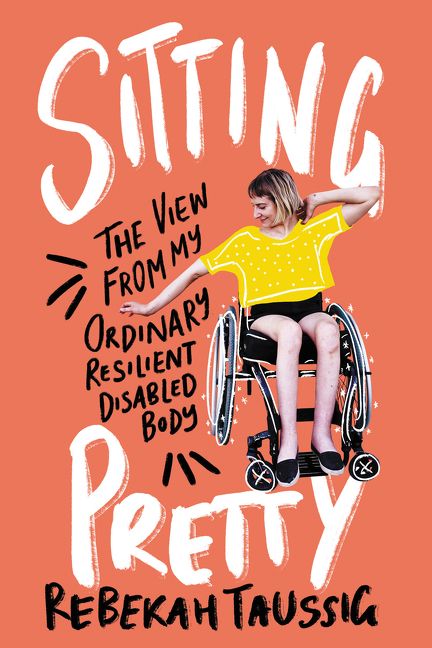
I just zipped through (delightedly, I might add!) the uber thoughtful and insightful Sitting Pretty: The View from My Ordinary Resilient Disabled Body by Rebekah Taussig. Though we haven’t actually met in person, her writing, (which I cannot recall how I discovered it) makes me feel as though we are friends. Rebekah writes with an honesty, fierceness, and passion that invokes the same in me, from a perspective similar (we both have beautiful and flawed bodies!) and different – hers ambulates primarily via wheelchair.

Her book examines the ways in which disabled people experience the world and how improving our collective thinking about their bodies and access (my goodness the workarounds of the wheelchair bound!) utlitmately benefits us all.

When I was in college, yakking it up among a group of male friends, a blind woman and her dog approached to ask me where she could find the bathroom. I gave the most succinct directions I could and received the loudest tongue lashing imaginable about her blindness and how dare I expect her to understand. The vitriol parted the group as though the Red Sea, and I shamefully guided her by the elbow along the path I so carefully described.

Decades later, I remain peeved by the interaction, for two reasons. 1. had she clearly communicated with me that she needed my physical guidance, I would have done it. I was and remain that person. 2. More importantly, why wasn’t this something our school provided? The reason for her rage certainly justified, though there is still no excuse for her berating me. I was not about to insult the intelligence of someone without my same abilities.

But now, as I do some foggy math, I wonder, was this in the fall of 1989, my first semester of college and before the Americans With Disabilities Act (ADA) was passed in 1990 (If you want to see the marvelous story of many of the people instrumental to the legistlation, watch Crip Camp: A Disability Revolution)? Before something as simple as someone guiding a woman to all the necessary (or even frivolous!) places on campus seemed logical? Before the inevitable stress of isolation and an urgent need to pee(!!) in an unfamiliar environment caused her to lash out at me. And after which, whenever I saw her, I immediately shut my trap for fear of it happening again. I mean, really, how simple it all could have been.

That interaction, as it goes with the most painful, taught me some valuable lessons of clarity in communication and how to be truly helpful. In times since, when I encounter someone with a disability, I ask: “I know this isn’t your first rodeo, but if you need help with that door, let me know.” Or others in wheelchairs, shorter than me, or otherwise hindered, “I’m not the tallest person around, but if there’s something you can’t reach, I’m happy to try.”

What is even more important, and what Rebekah emphasizes, is how we can make this a seamless process for everyone. Which reminds me of another woman, who rode her wheelchair, sometimes with a child on her lap, on the busiest of roads in Portland. My initial feeling was of horror and rage. How dare she put herself and a child in danger like that?! A car could easily hit her. Then the realization hit me, after remembering walking those same streets. There were no wheelchair ramps! She, to get from point A to point B, was left with little choice.

So the question remains — How do we make all spaces more accesible to all? Wouldn’t it be great if there were solutions everywhere, without anyone feeling impotent, or forced into dangerous situations, or hoping for some stranger to offer aid?

Rebekah also discusses bodies that don’t appear disabled, like mine when I am severely depressed, or when I lived with the chronic and debilitating pain of endometriosis. The lousy feeling of being other. How my cheerful demeanor, because, despite how awful I felt, life was still good, made doctors and others doubt me, brush me off, act as though it was only an attention grab. “You just need to learn to relax.” (In actuality my insides were ripping apart. Literally.) “Write a list to make you feel happy!” These responses made me fear telling anyone, because they had the solution to my very simple problem (grrrr….), and I was just a weak and defective idiot, unworthy of love or trust.

She also writes about the common fear (one I share) of a job loss that would deprive us of insurance and critical care. The threat of bankruptcy and outrageous premiums for a pre-existing condition laden body.

What might be most striking about Rebekah’s book, is when she encounters people with the belief that a life without disability is the only one worth living. I can say with certainty, based on my own experience, and witnessing that of my cousin, whose genetic disorder has delayed her walking and speech, lives mostly in a world of her making, one in which she scoots and crawls about, shouting and flapping her arms in laughter and raucous joy, is, quite possibly, one of the happiest people I know. I am enriched and enlightened by her, more thoughtful and clear of purpose in her presence. More joyful, too.
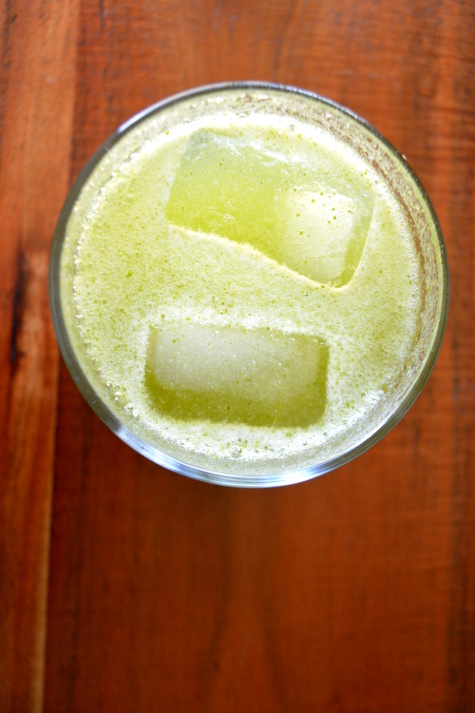
We grow quite a bit of mint and forget to use it more often than not. In a mint-lucid moment, I grabbed a bunch, whirred it in the Vitamix with lime and sugar syrup before topping it off with fizzy water. The color was a delightful almost neon, and the flavor equally electric. I am so parched looking at it that I think I’m going to beg off writing this post for a few to make another. You won’t know the difference, and summer couldn’t really ask for a better drink.

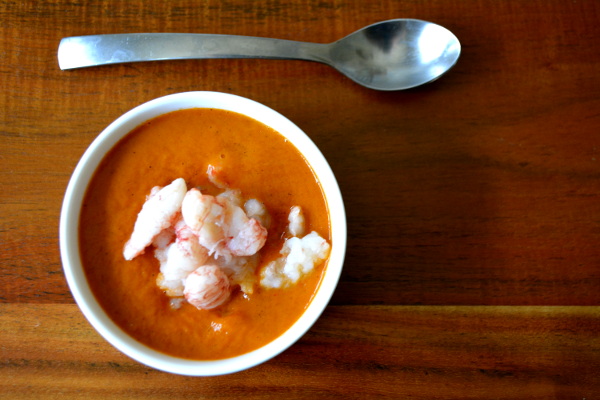
Well before the pandemic had us mostly confined, Greg and I found ourselves spending more and more time at home, thinking about moving to the country, as our need for space, starry skies, and silence grew more important. Interaction with other people, for in-theater movies, sporting events, art galleries and museums, and dining out became less and less so. And so, depsite the horrors and losses of this dreaded disease, we feel grateful to know that our isolation is neither a punishment nor a burden.

Additionally, and I sometimes feel snobby for saying so, but I like my food best. At the times when I crave something special, something I don’t feel like cooking, or when I simply need a break from the kitchen, and we go out or order in, I am often disappointed, and Greg whispers, “Yours is better.” So we are pinching the necessary pennies and hoping to have our own slice of quiet country life, hopefully sooner than later.

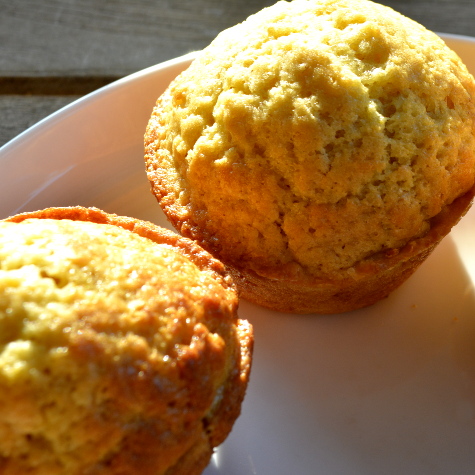
When we lived in Portland, our dear neighbor Pat went through the trauma of breast cancer. It was an awful and stressful time for her, and just about the only way we could help out was to make food. Her favorites were my lasagna (at least at the beginning, before she was terribly sick) and these ginger muffins. While rooting through recipes on the hunt for something else, I stumbled upon it, entitled, without an ounce of creativity, “Pat’s Cancer Muffins.” I don’t remember if they were a riff off someone else’s idea or my own fabrication. They don’t look like much but were as tasty as I remembered. Maybe you’ll like them, too.

3 oz piece unpeeled ginger root

3/4 cup sugar

2 tablespoons lemon zest

8 tablespoons unsalted butter, at room temperature

2 large eggs

1 cup buttermilk

2 cups flour

1/2 teaspoon salt

3/4 teaspoon baking soda

Cut ginger into large chunks. Process into tiny pieces. Alternatively, use a microplane to shred it or mince it by hand. Put the ginger and 1/4 cup sugar in a saucepan and cook over medium heat until the sugar is melted. Set aside to cool.

Add zest to ginger mixture.

Beat the butter with remaining sugar until smooth. Add the eggs, beat well. Add the buttermilk, beat until blended. Add the flour, salt, and baking soda, and beat until smooth. Add the ginger mixture, beat until well blended. Spoon batter into prepared muffin tin (I prefer to grease the tin rather than use papers for a crispy texture). Bake for 18-20 minutes at 375, or until a tester comes out clean. Serve warm.

Variation:

4 tablespoons butter & 4 tablespoons olive oil

1/2 cup buttermilk & 1/2 cup orange juice

zest of one orange

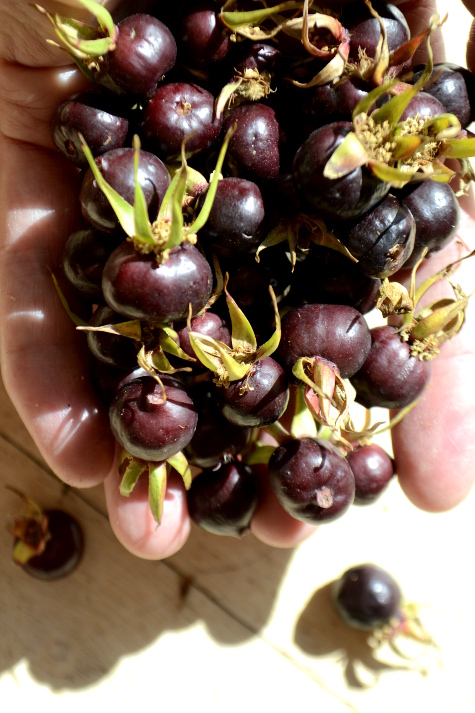
Grandma’s rose bush made a heap of beautiful hips! I made delicious jelly!

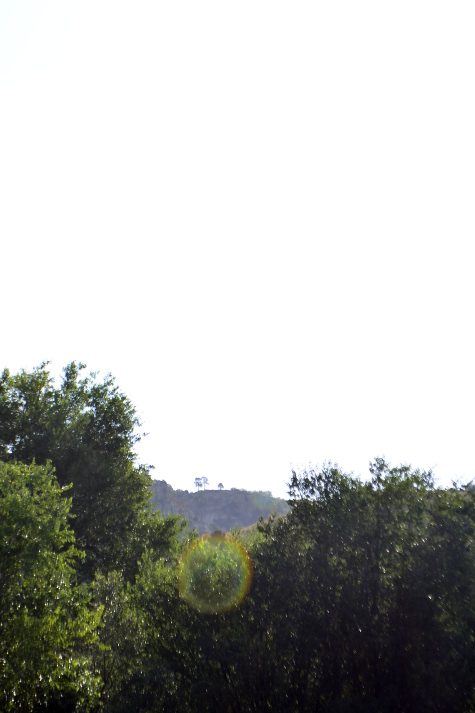
The rim of Palmer Park between the trees. We walk here at least once a week, in most weather — Juniper hates the rain.

« Older entries § Newer entries »